

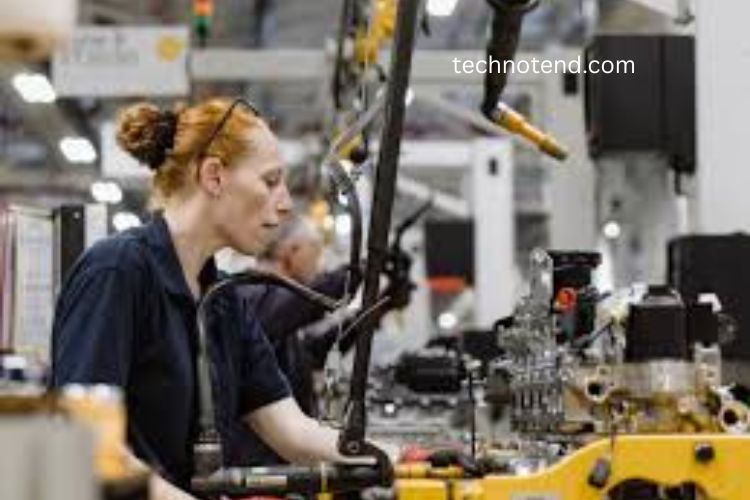
UK manufacturing is showing its first signs of recovery in a year, fueled by the restart of production at Jaguar Land Rover (JLR) following a major cyberattack. The revival highlights the resilience of the sector, even amid ongoing economic uncertainties and global supply challenges.
Read More: http://technotend.com/in-march-2026-now-supercharged-with-google-gemini/
Manufacturing Output Climbs for the First Time in a Year
The latest S&P Global survey of purchasing managers in UK factories reveals a significant turnaround. In October, manufacturing output rose for the first time since the previous year, signaling a potential shift in momentum for the beleaguered sector.
S&P Global reports that production volumes increased in both consumer and intermediate goods industries. The staged restart of JLR production played a key role in this growth, providing a temporary boost to the overall manufacturing landscape.
This increase helped push the UK Manufacturing Purchasing Managers’ Index (PMI) to a 12-month high of 49.7 in October, up from 46.2 in September. While still below the neutral 50 mark, this improvement reflects a slower contraction in activity and a cautious sense of optimism among manufacturers.
The Role of Jaguar Land Rover in the Recovery
Jaguar Land Rover, one of the UK’s largest automotive manufacturers, faced a crippling cyberattack that forced a complete shutdown of operations for nearly a month. The halt contributed to a historic drop in UK car production, which fell to a 73-year low.
In early October, JLR began a phased restart of its operations, gradually bringing production lines back online. This move not only restored jobs and supplier activity but also injected much-needed momentum into the UK manufacturing sector.
Rob Dobson, director at S&P Global Market Intelligence, commented:
“The October PMI survey shows UK manufacturing production rising for the first time in a year, which is a positive in itself. However, there are real concerns that the bounce could prove short-lived.”
Dobson emphasized that while the automotive sector benefited from the JLR restart, the overall improvement in manufacturing output may not be sustained. Much of October’s growth relied on clearing backlogs of previous orders and the accumulation of unsold stock, rather than a surge in new demand.
Temporary Boost or Sustainable Growth?
Industry analysts caution that the recovery could be fragile. The spike in production from JLR’s return is largely a one-off effect, unlikely to create long-term expansion unless demand from domestic and international markets picks up.
Sluggish consumer spending and ongoing global economic challenges continue to weigh on manufacturers. Supply chain disruptions, rising energy costs, and inflationary pressures further complicate the outlook for sustained growth.
Despite these hurdles, the partial recovery offers some optimism. Manufacturers who can capitalize on the temporary boost to clear inventories and streamline production processes may be better positioned when demand eventually strengthens.
Sector-Specific Performance Insights
The S&P Global survey also provides insight into sector-level performance. Consumer goods and intermediate goods industries were the primary drivers of October’s output growth. Meanwhile, sectors dependent on exports or highly vulnerable to supply chain disruptions showed only marginal improvements.
The automotive sector, in particular, remains central to the UK manufacturing recovery story. JLR’s phased restart demonstrates how single large firms can have outsized effects on national output figures, underscoring the sector’s significance in economic performance.
Other industries are gradually adapting to post-pandemic market conditions, seeking efficiency gains and innovative approaches to production. Automation, digital transformation, and flexible supply chains are emerging as key strategies for resilience in uncertain markets.
Challenges Facing UK Manufacturers
While the rebound is encouraging, UK manufacturers face several structural and cyclical challenges:
- Global Demand Uncertainty: Weak demand from both domestic and international markets limits the potential for sustained growth. Export-oriented manufacturers remain especially vulnerable to geopolitical tensions and trade barriers.
- Supply Chain Disruptions: Shortages of raw materials and delayed deliveries continue to hinder production planning. Cybersecurity threats, like the one experienced by JLR, add an additional layer of risk.
- Rising Costs: Inflationary pressures, energy price spikes, and labor costs increase production expenses, squeezing profit margins.
- Temporary Boosts: One-off events such as JLR’s restart can create misleading signals in production data, masking underlying weaknesses in demand.
These challenges highlight the need for strategic planning and investment in operational resilience. Companies that can adapt quickly to changing market conditions are likely to weather the volatility more effectively.
Outlook for the UK Manufacturing Sector
Looking ahead, the UK manufacturing sector is poised for a cautious recovery. Analysts believe that while output may continue to stabilize, sustained growth will depend on several key factors:
- Revival of Consumer and Business Confidence: Stronger demand for goods and services is critical to translating temporary production spikes into long-term growth.
- Investment in Technology and Automation: Enhancing efficiency and reducing reliance on vulnerable supply chains can protect manufacturers against future disruptions.
- Supportive Policy Environment: Government incentives, trade facilitation, and investment in infrastructure could bolster the sector’s competitiveness globally.
The automotive sector is likely to remain a bellwether for the broader industry. Continued recovery at JLR and other major car manufacturers could provide momentum, but diversification and resilience in other manufacturing segments will determine the overall trajectory.
Frequently Asked Questions:
Why are UK factories experiencing growth now?
UK factories are seeing growth largely due to the phased restart of Jaguar Land Rover (JLR) operations after a cyberattack shutdown. This restart temporarily boosted production volumes, particularly in consumer and intermediate goods sectors.
What impact did the JLR cyberattack have on UK manufacturing?
The cyberattack forced JLR to halt operations for nearly a month, pushing UK car production to a 73-year low and affecting the wider supply chain.
What is the UK Manufacturing Purchasing Managers’ Index (PMI), and why does it matter?
The PMI is an economic indicator measuring the health of the manufacturing sector. In October, the UK PMI rose to 49.7, signaling a slowdown in contraction and potential recovery momentum.
Are UK manufacturing gains expected to be long-term?
Analysts warn that the rebound may be short-lived, as it is partly driven by clearing backlogs and stockpiles rather than increased demand from domestic or overseas markets.
How have US manufacturing exports been affected by tariffs?
US manufacturing exports have been negatively impacted by tariffs, making American goods more expensive abroad and reducing demand in key international markets.
Which sectors in the UK are benefiting most from the recovery?
The consumer goods, intermediate goods, and automotive sectors are experiencing the most noticeable gains, with JLR’s restart acting as a major driver.
What challenges remain for UK manufacturers?
Key challenges include global demand uncertainty, supply chain disruptions, rising production costs, and dependency on temporary production boosts like JLR’s restart.
Conclusion
The revival of UK manufacturing, sparked by Jaguar Land Rover’s return to production, offers a hopeful sign after a challenging year. While October’s growth signals resilience, much of the rebound is temporary, reliant on cleared backlogs and accumulated stock rather than new demand. Ongoing challenges—such as global market uncertainty, rising costs, and supply chain vulnerabilities—mean sustained recovery will require strategic planning, investment in technology, and agile operations.