

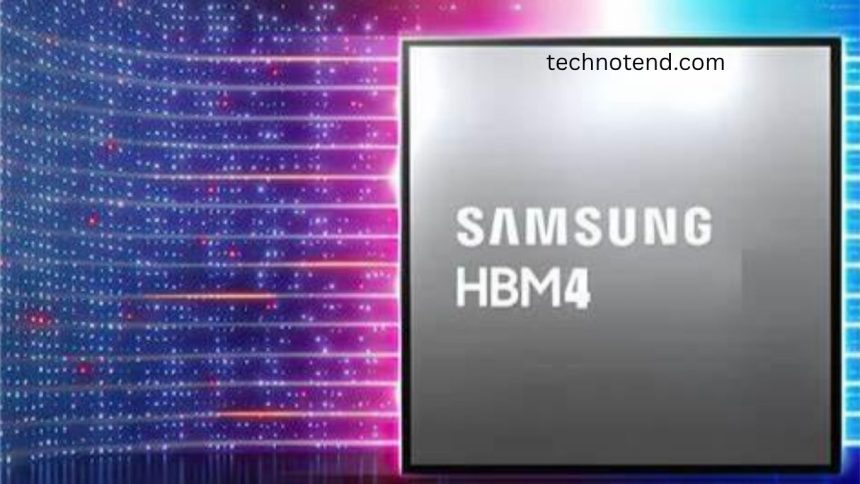
Samsung Electronics is preparing for a powerful comeback in the global semiconductor race. The tech giant recently confirmed that it is in active talks with NVIDIA to supply its next-generation HBM4 (High Bandwidth Memory 4) chips — a move that could redefine its position in the booming AI hardware market. While Samsung has not yet disclosed an exact shipment date, it announced plans to begin mass production next year, signaling a bold step toward technological dominance.
- The Growing Race in HBM Technology
- Samsung and NVIDIA: Strengthening a Strategic Alliance
- Revamping Samsung’s Semiconductor Strategy
- Breakthrough with 12-Layer HBM3E Chips
- HBM Technology: The Backbone of AI Acceleration
- Analysts Predict a Fierce Market Showdown
- Samsung’s Vision: Dominating the AI Era
- Challenges and Opportunities
- Frequently Asked Questions:
- Conclusion
This new chapter comes at a time when AI computing power is driving unprecedented demand for advanced memory solutions. HBM technology, central to this revolution, enables lightning-fast data transfer and exceptional energy efficiency — both crucial for high-performance AI systems and large-scale data processing.
The Growing Race in HBM Technology
The competition in the high-bandwidth memory market is intensifying as companies rush to meet surging AI hardware demands. Samsung’s primary rival, SK hynix, recently revealed that it will begin shipping its own HBM4 chips by the fourth quarter of this year, with plans to expand supply in 2026. Meanwhile, Micron Technology is also advancing its production to stay relevant in the fierce AI race.
For years, SK hynix has held a strong lead in the HBM sector, supplying critical memory components to NVIDIA’s powerful GPUs used in training large AI models such as ChatGPT and Gemini. However, Samsung’s upcoming HBM4 chips could shift the balance. The company aims to combine performance excellence with greater energy efficiency, offering NVIDIA and other tech leaders an alternative, high-quality source for next-generation memory.
Samsung and NVIDIA: Strengthening a Strategic Alliance
In an official statement, NVIDIA confirmed ongoing collaboration with Samsung and other Korean semiconductor giants to ensure stable supply chains for HBM3E and HBM4 products. This partnership underscores the growing importance of memory innovation in shaping the future of AI and data processing.
By aligning with NVIDIA — the current global leader in AI chip design — Samsung is not only strengthening its market presence but also positioning itself at the core of the AI infrastructure ecosystem. This collaboration reflects a mutual goal: to achieve higher performance and efficiency in AI computing while ensuring a resilient supply network amid increasing global demand.
Revamping Samsung’s Semiconductor Strategy
Samsung’s renewed focus on high-performance memory marks a major turnaround for its semiconductor division. After facing setbacks in capitalizing on the AI-driven memory boom, the company has undertaken a massive restructuring effort to restore competitiveness.
In recent quarters, Samsung has reported improved financial performance, supported by rising demand for both AI-oriented and traditional memory products. This momentum has reignited confidence among investors and analysts, who view Samsung’s HBM4 development as a critical step toward reclaiming leadership in the DRAM market.
Breakthrough with 12-Layer HBM3E Chips
Earlier this week, Samsung announced that it has successfully supplied its latest 12-layer HBM3E chips to all key customers — a powerful signal that the company is back in the premium AI memory supply chain. These advanced chips deliver faster processing speeds, greater bandwidth, and improved thermal efficiency, setting new benchmarks for performance in AI data centers and high-end GPU systems.
This achievement reinforces Samsung’s commitment to innovation and highlights its ability to scale up complex technologies efficiently. With HBM3E now in wide distribution, the transition to HBM4 is expected to be smoother, more efficient, and strategically timed to align with NVIDIA’s next-generation GPU launches.
HBM Technology: The Backbone of AI Acceleration
Introduced in 2013, High Bandwidth Memory (HBM) technology revolutionized the way DRAM functions. Unlike traditional memory architectures, HBM stacks multiple memory dies vertically, connected by through-silicon vias (TSVs). This structure drastically increases data bandwidth, minimizes latency, and reduces energy consumption — making it ideal for AI workloads, 3D graphics, and cloud computing.
Each new generation of HBM has brought exponential gains in performance and efficiency. HBM4, expected to debut in 2025, will deliver double the bandwidth of HBM3E, with enhanced thermal management and improved interconnect designs. These advancements will empower AI models, data centers, and high-performance GPUs to process massive datasets faster than ever before.
Analysts Predict a Fierce Market Showdown
Industry experts believe that Samsung’s entry into HBM4 production will mark a turning point in the semiconductor industry. As the company strengthens ties with NVIDIA, analysts foresee increased competition among the top three players — Samsung, SK hynix, and Micron — all racing to meet the escalating needs of AI chipmakers like AMD, Intel, and NVIDIA.
Market forecasts indicate that global demand for HBM could more than triple by 2026, driven by the rapid expansion of AI data centers and autonomous computing systems. If Samsung delivers on its promise of performance and reliability, it could capture a significant share of this multibillion-dollar market, boosting its profitability and long-term growth.
Samsung’s Vision: Dominating the AI Era
Samsung’s aggressive push into HBM4 isn’t just about keeping pace — it’s about defining the future of AI infrastructure. The company envisions a future where AI accelerators, data servers, and smart systems all rely on ultra-fast, energy-efficient memory to power next-generation innovation.
By integrating AI-driven optimization, advanced packaging technologies, and sustainable manufacturing, Samsung aims to solidify its role as a global leader in AI hardware. Its upcoming HBM4 chips are expected to play a pivotal role in supporting large-scale language models, 3D simulations, and real-time analytics — all essential components of the AI revolution.
Challenges and Opportunities
Despite the excitement surrounding Samsung’s HBM4 launch, the company faces significant challenges. The HBM manufacturing process is complex and requires extremely precise engineering, with even minor defects leading to substantial losses. Moreover, the global chip shortage, coupled with intense pricing pressure, continues to test the resilience of memory manufacturers.
However, Samsung’s vast R&D resources, combined with its strategic partnerships and strong supply chain ecosystem, position it well to navigate these hurdles. If successful, its HBM4 rollout will not only reinforce its competitive strength but also redefine performance standards across the semiconductor industry.
Frequently Asked Questions:
What is driving Samsung’s record-breaking memory sales?
Samsung’s recent surge in memory sales is largely fueled by the global boom in artificial intelligence (AI), cloud computing, and data center demand. As AI models grow more complex, they require faster and more efficient memory solutions — a space where Samsung’s high-performance DRAM and HBM technologies excel.
What is HBM4 and why is it considered game-changing?
HBM4 (High Bandwidth Memory 4) is the upcoming generation of advanced DRAM designed to offer faster data transfer speeds, higher bandwidth, and improved power efficiency compared to its predecessors. It’s expected to play a vital role in AI accelerators, GPUs, and next-gen servers, enabling more powerful and energy-efficient computing.
When will Samsung begin mass production of HBM4 chips?
Samsung has announced plans to begin mass production of HBM4 chips in 2025, though the exact shipment timeline has not yet been disclosed. The company is currently in discussions with NVIDIA and other key partners to finalize supply agreements.
How does Samsung’s HBM4 compare to SK hynix and Micron’s memory products?
Samsung’s HBM4 is expected to compete directly with SK hynix’s HBM4 and Micron’s high-end DRAM solutions. While SK hynix currently leads the market, Samsung’s focus on higher capacity, improved thermal design, and strong supply chain capabilities may give it an edge in large-scale AI and GPU deployments.
Why is Samsung collaborating with NVIDIA on HBM4 development?
NVIDIA relies heavily on HBM technology for its AI GPUs, including those powering advanced models like ChatGPT and Gemini. By partnering with Samsung, NVIDIA ensures a stable supply of high-quality memory chips, while Samsung gains a strategic foothold in the growing AI infrastructure market.
What makes HBM technology so crucial for AI systems?
HBM (High Bandwidth Memory) is essential because it allows rapid data exchange between processors and memory. This high-speed communication dramatically boosts AI model training efficiency, reduces latency, and optimizes power consumption, making it indispensable for data-intensive applications.
How has Samsung improved its position in the semiconductor market?
After lagging behind competitors in the AI memory race, Samsung restructured its semiconductor division to focus on innovation and efficiency. The success of its 12-layer HBM3E chips and upcoming HBM4 rollout signals a strong comeback, positioning the company as a top-tier AI memory supplier.
Conclusion
Samsung’s record-breaking memory sales and its bold move toward HBM4 mass production mark a defining moment in the global semiconductor race. With strong alliances — particularly with NVIDIA — and renewed focus on AI-driven technologies, the company is clearly positioning itself as a pioneer in next-generation memory solutions. As AI, cloud computing, and data analytics continue to reshape the world, Samsung’s advanced HBM4 chips are set to deliver the speed, efficiency, and power needed to fuel this transformation. By combining cutting-edge engineering with strategic foresight, Samsung is not only reclaiming its place at the forefront of innovation but also setting new performance benchmarks for the entire industry.